Columbia Climate NewsPolicyApr 17 Tree Rings Reveal Hurricane Impacts and Emerging Sea-Level Stress in Coastal Forests
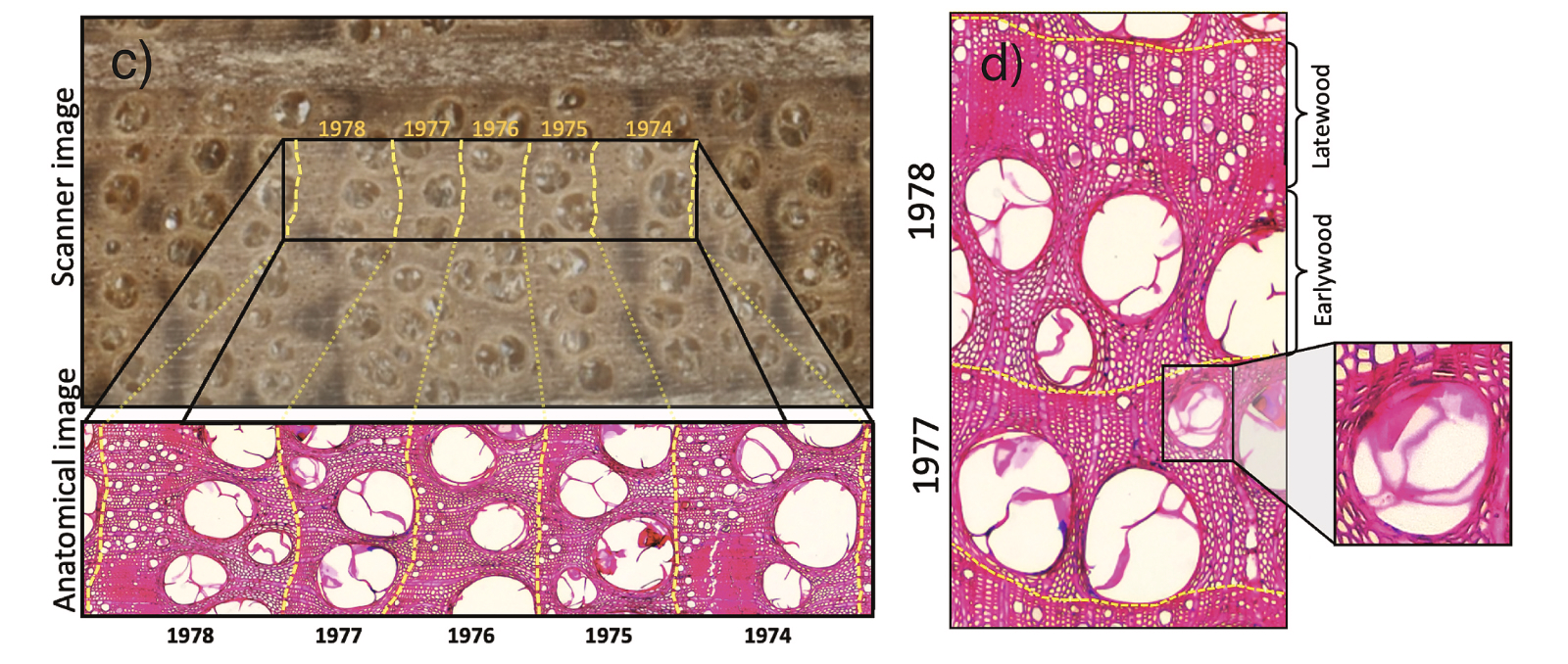
New research suggests that trees largely recover from storms within two years, and that coastal trees may be stressed from sea-level rise.
Abatify Summary
**Coastal forests exhibit high short-term resilience to hurricane-force disturbances but face terminal systemic degradation from chronic sea-level rise and salinity stress.**
- Tree-ring analysis confirms a rapid two-year biomass recovery trajectory post-storm, suggesting strong ecological elasticity in sequestration capacity.
- Chronic inundation and saline intrusion drive the formation of 'ghost forests,' representing a permanent loss of biodiversity and LULUCF carbon sink functionality.
- The transition from freshwater to brackish conditions creates a 'silent' stressor that reduces primary productivity long before physical tree mortality is visible.
**The divergence between recoverable acute storm impacts and non-recoverable chronic sea-level rise necessitates a recalibration of permanence risk modeling for coastal Nature-Based Solutions (NBS).**
- Under ICVCM Core Carbon Principles (CCPs), the 'Permanence' of coastal projects is increasingly threatened by sea-level rise, likely requiring larger buffer pool allocations for Blue Carbon credits.
- Market pricing for coastal LULUCF assets may begin to discount projects based on elevation and salinity ingress forecasts to mitigate Scope 3 reversal risks.
- Policy frameworks under Article 6.4 must differentiate between 'recoverable disturbances' (hurricanes) and 'regime shifts' (sea-level rise) when setting dynamic baselines for ITMOs.